
Team Alignment: The Overlooked Factor in Successful Fleet Electrification
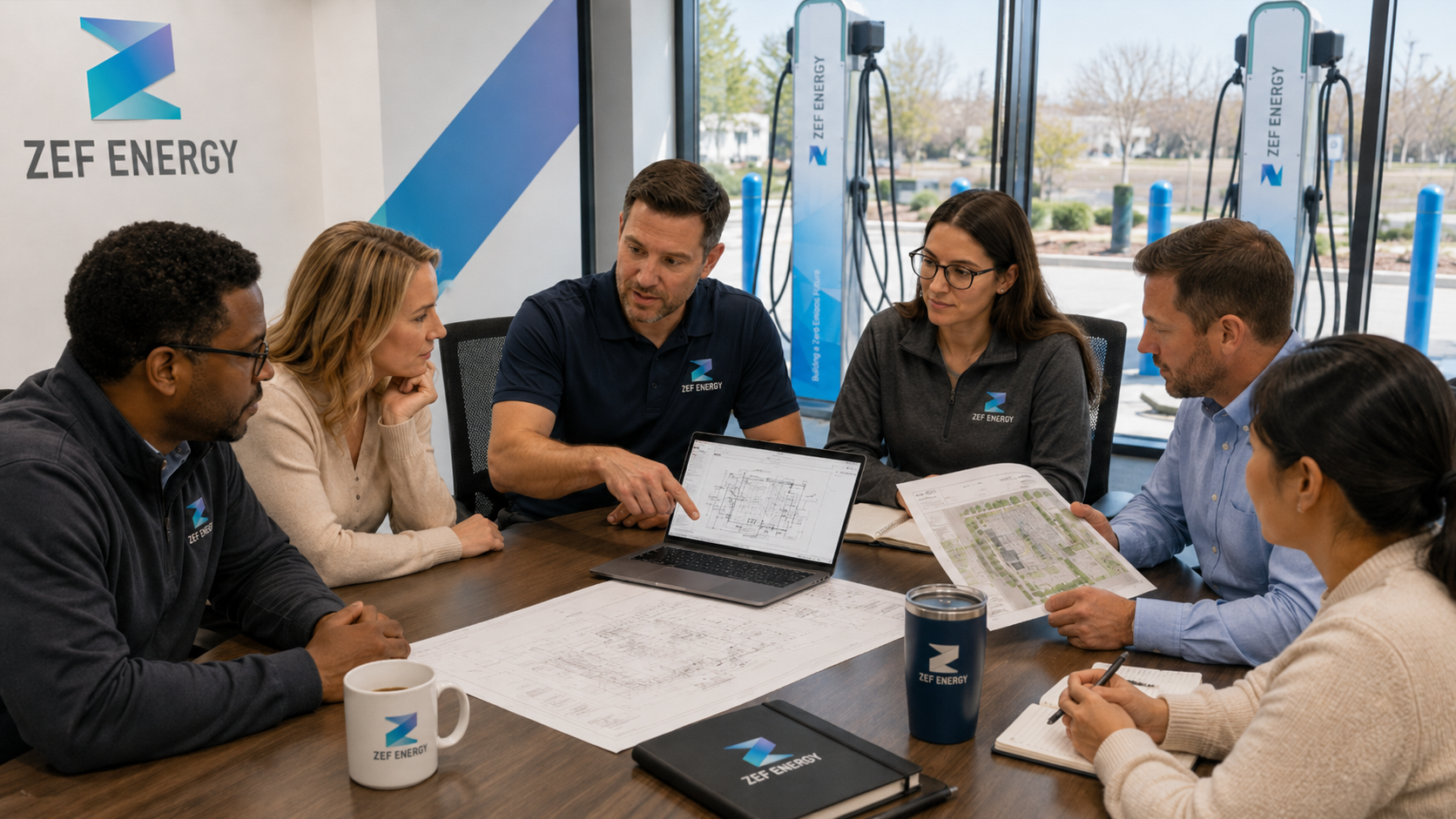
The fleet electrification projects that go well usually share one trait that doesn't show up on a spec sheet: alignment across teams. Chargers matter. Vehicles matter. Utility coordination matters. But the strongest projects rarely come from one department making decisions on its own. They come from getting the right people involved early, while there's still time to shape the plan, before timelines, budgets, and site decisions get locked in.
Fleet electrification isn't only a fleet operations project. It touches facilities, finance, procurement, IT, utility coordination, driver workflows, maintenance planning, and long-term infrastructure strategy. Each team sees a different part of the project, and each one holds information that can change the outcome.
Fleet operations understands the vehicle requirements.
Facilities understands the site constraints.
Finance understands the budget and funding timeline.
IT understands connectivity, data, and cybersecurity needs.
The utility understands interconnection timelines, available capacity, and rate structures.
When those teams are aligned early, projects tend to move smoothly. When they aren't, important constraints tend to surface late, when they're harder and more expensive to fix.
Why Team Alignment Matters
Fleet electrification decisions are connected. A vehicle decision affects charger requirements. Charger requirements affect electrical design. Electrical design affects utility coordination. Utility coordination affects timeline and cost. Monitoring requirements affect software selection, which often pulls IT into the process.
When one team moves ahead without the others, the project can look aligned on paper while still carrying real risk. For example:
A fleet team may select vehicles before facilities confirms site capacity.
Facilities may approve a charging location before IT reviews connectivity requirements.
Procurement may start vendor evaluation before utility coordination clarifies interconnection timing.
These issues are usually solvable. The problem is timing. When they surface late, they delay deployment, add cost, or force a redesign.
The Teams That Need to Be in the Room
A strong planning process starts by identifying who needs to be involved before the design is finalized. For most organizations, that includes six teams.
Fleet Operations: This team understands duty cycles, vehicle replacement schedules, driver needs, shift timing, route requirements, and charging windows. They define what the infrastructure actually needs to support.
Facilities: This team understands the physical site: parking layout, electrical rooms, panel locations, conduit paths, available space, accessibility, and construction constraints, as well as room for future expansion. They determine what's realistic at the site level.
Finance: This team understands capital budgets, grant timelines, operating costs, and long-term funding strategies. They connect infrastructure decisions to budget cycles and funding availability.
IT: IT often plays a bigger role than expected in EV charging projects. Charging infrastructure can involve network connectivity, user access, data reporting, cybersecurity reviews, system integrations, and dashboard requirements. Bringing IT in early helps prevent software and connectivity issues from surfacing late in the process.
Procurement: The procurement team ensures the buying process matches the organization's requirements, funding rules, documentation needs, and timeline. This is especially important for public-sector or grant-funded deployments.
Utility Partner: Your utility partner shapes service upgrades, interconnection scheduling, rate design, demand charges, managed charging opportunities, and future expansion planning. A utility conversation that starts too late can delay both vehicle readiness and infrastructure readiness.
What Happens When Teams Work in Silos
Silos create late-stage surprises. A fleet decision made without facilities input can lead to a site that can't support the required charging load. A site design approved without IT input can create connectivity or data reporting gaps. Procurement that moves ahead without utility coordination can build a timeline that doesn't match interconnection reality.
These problems aren't usually caused by bad decisions. They're caused by incomplete information. The earlier teams compare what they know, the sooner those constraints become visible—while they're still easy to solve.
Why One Early Planning Session Can Change the Project
A single cross-functional planning session early in the project can surface more useful information than months of separate vendor conversations. That meeting doesn't need to solve every detail. Its purpose is to align the people who each hold a different piece of the project.
The right meeting can clarify:
Vehicle timing and duty cycles
Parking and site constraints
Electrical capacity and upgrade needs
Funding and budget timing
Procurement requirements
Network and data needs
Utility coordination timelines
Future expansion expectations
Once those inputs are visible, the project plan becomes more realistic. The hard questions come out earlier. The timeline gets clearer earlier. The infrastructure design becomes more grounded in actual operational needs.
A Better Planning Question
Instead of asking only: "How many chargers do we need?" Organizations should also ask: "Who needs to be in the room before we make infrastructure decisions?"
That question changes the planning process. It moves the project from a vendor conversation to an operational planning conversation. It helps avoid the common problem of solving one department's need while creating a problem for another.
Alignment Creates Better Infrastructure Decisions
Fleet electrification projects hold up better when they're planned across teams. The strongest deployments aren't just technically sound. They're operationally aligned. They account for the vehicles, the site, the budget, the utility timeline, the data requirements, the procurement process, and the long-term operating model.
That kind of alignment doesn't happen by accident. It has to be built into the planning process from the start.
Planning a fleet electrification project? ZEF Energy helps your team bring the right stakeholders into the planning process early, identify site and operational constraints, and build an EV charging infrastructure plan that supports long-term fleet needs.